
If your brain feels like it has 47 tabs open at once, stream-of-consciousness journaling might be the fastest, cheapest way to hit “refresh.”
Instead of crafting perfect sentences, you dump what is in your head straight onto the page.
In this article, we will walk through seven science-backed stream of consciousness journaling benefits, show you how to test them in a simple experiment, and share how a tool like Mindsaurus can make the habit easier to stick with.
What Are the Key Stream of Consciousness Journaling Benefits?
Stream-of-consciousness writing is just expressive writing with fewer rules: you set a timer, write whatever shows up in your mind, and you do not stop to edit. Over time, people often report less mental noise and more emotional clarity.
Research on journaling and expressive writing links this practice to lower distress, reduced anxiety, and improved overall well-being, especially when practiced regularly.
1. Clearing Mental Clutter and Overthinking
One of the most immediate benefits of stream-of-consciousness journaling is how quickly it gets thoughts out of your head and into a place you can see them – that “brain dump” matters.
Studies on journaling show that writing about your internal experience can reduce distress and help people feel less overwhelmed by their own thoughts.
When you write without censoring yourself, worries that feel huge in your mind often look more manageable on paper. You can spot repeating themes, irrational loops, and problems that do not deserve as much mental real estate as they are getting.
Over days or weeks, many people notice fewer spirals into overthinking because they have a daily outlet for that mental clutter.
2. Lowering Everyday Anxiety and Stress
Another key set of stream of consciousness journaling benefits is its impact on everyday anxiety and stress. A meta-analysis of journaling interventions found statistically significant improvements in mental health scores, with some of the clearest gains in anxiety and PTSD symptom subgroups.

The mechanism is simple: putting vague worries into words creates psychological distance. Writing activates brain regions involved in emotional regulation and decision-making, which helps calm the fight-or-flight response.
Over time, even a few minutes of expressive writing several times a week can become a built-in de-stress ritual that reduces baseline tension. That calmer baseline is one of the most valuable benefits of stream-of-consciousness journaling for daily life.
3. Building Emotional Awareness and Regulation
Stream-of-consciousness writing also supports emotional awareness. Instead of pushing feelings down or numbing out, you give them a safe channel. Naming and exploring emotions on paper can lead to fewer negative reactions to stressors and better emotional regulation over time.
One underrated benefit of stream-of-consciousness journaling is that you start to see patterns: what triggers your reactions, which situations leave you drained, and what actually helps you reset. That makes it easier to catch yourself earlier, choose more effective coping tools, and communicate your emotional state more clearly to others.
4. Processing Difficult Experiences Safely
Expressive writing has been used in research for decades to help people process stressful or traumatic events. Participants who write openly about difficult experiences often show improvements in both physical and psychological health compared with those who write about neutral topics.
Stream-of-consciousness journaling is a flexible way to use the same principle. You do not have to tell the whole story in one sitting. You can circle a tough memory, approach it in small pieces, and step back when it feels overwhelming.
You can process experiences at your own pace, in private, while still getting the emotional release that comes from putting words to what happened.
At the same time, journaling is not a replacement for therapy, especially after trauma or during acute crises. It is best seen as a complementary tool alongside professional support.
5. Supporting Mood, Optimism, and Gratitude
Not every page has to be heavy. Positive writing and gratitude-focused journaling have been linked to lower stress and better mood in multiple studies.
When you blend that with free-flow stream-of-consciousness writing, you get a practice that lets you unload tough feelings and then gently pivot toward what is working.

After venting, you can end each entry by listing three things you are grateful for or one small win from the day. Research on gratitude suggests that regularly focusing attention on positive experiences can improve mood, reduce anxiety, and support long-term mental resilience.
6. Clarifying Values, Patterns, and Decisions
When you look back at your entries after a week or two, patterns start to stand out. You may see the same conflicts, frustrations, or hopes recurring. That is where a more subtle stream-of-consciousness journaling approach benefits you: you gain insight into what actually matters to you.
This kind of informal “data” can be more honest than what you would say on the spot. Over time, re-reading selected entries can help you spot misaligned priorities, unhealthy routines, or relationships that are draining you.
That makes it easier to make decisions that align with your values rather than reacting on autopilot. The journal effectively becomes a mirror for your inner life and a rough map for your next decisions.
7. Making It Easier to Talk About Mental Health
Finally, one of the most practical benefits of stream-of-consciousness journaling is that it can prepare you for real conversations.
If you are planning to talk to a friend, parent, or therapist about your mental health, starting with a few pages of unfiltered writing can clarify what you actually want to say.
Journaling gives you language, examples, and concrete moments you can point to. For people who struggle to open up verbally, having that written record can make it less intimidating to say “Here is what has been going on,” and share parts of an entry instead of starting from scratch in the moment. That reduces the pressure of “saying it perfectly” and lets you focus on getting support.
How Mindsaurus Can Support Your Journaling Practice
Stream-of-consciousness writing can feel intimidating at first, especially for teens and young adults who are new to mental health tools. This is where a platform like Mindsaurus can help you get more out of the same habit.
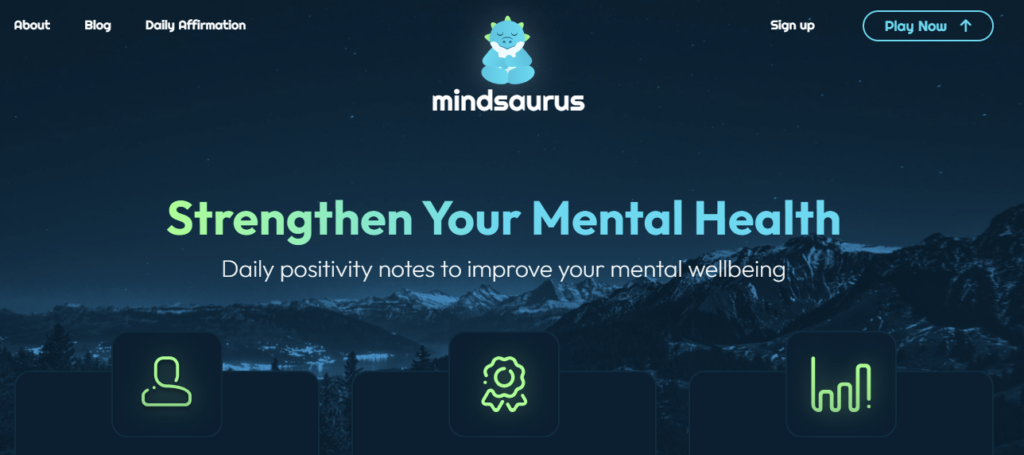
Mindsaurus is a wellness app and digital platform built to help users cultivate a more positive mindset, practice gratitude, and manage negative thoughts. Instead of staring at a blank page, you can use short, guided prompts to ease into your writing, then shift into free-flow entries once you are warmed up.
Final Thoughts
The main reason people underestimate journaling is that they treat it like a writing project. It is not. It is a mental hygiene tool.
The stream of consciousness journaling benefits show up when you write consistently, keep it messy, and track simple outcomes like stress, rumination, and sleep. Run the 7-day experiment, measure the change, and keep what works.
It costs nothing. It requires no special tools. And when paired with structured platforms like Mindsaurus that reinforce positive mindset development, the impact becomes more sustainable.